Externer Inhalt robertsspaceindustries.comInhalte von externen Seiten werden ohne Ihre Zustimmung nicht automatisch geladen und angezeigt.RISE
ABOVEFor a century and a half, the Anvil Hornet has proven itself Humanity’s most-trusted military defender. The original set the standard - defining the space-superiority fighter - while the Mk II refined it beyond expectation, becoming legend following covert operations in Odin and an explosive victory at the Battle of Vega.
Now, in the face of further adversity, Anvil is unleashing the Mk II onto the civilian market, beginning with the F7C.
Stronger, faster, and with heavier firepower, the Hornet Mk II is poised to preserve the Empire and protect its people once more.
Externer Inhalt robertsspaceindustries.comInhalte von externen Seiten werden ohne Ihre Zustimmung nicht automatisch geladen und angezeigt.F7A HORNET MK II
Authorized Mil-Spec Upgrade
XenoThreat has returned and the stakes have never been higher. So, for the
first time in history, the UEE Navy has approved the military-exclusive F7A
Hornet Mk II for civilian use. Hitting harder than the already devastating F7C
thanks to additional turrets and missiles, the F7A is a no-compromise fighter
outfitted for the most dangerous combat encounters.However, such a focused war machine can’t be operated by anybody. To gain
approval, play your part in the Overdrive Initiative - a Civilian Defense Force
operation to wipe out XenoThreat terrorists before they can assault
Stanton. Upon completion, the UEE Navy will grant all F7C Mk II owners a
complimentary upgrade to the F7A Mk II.
Anvil upped the ante with larger hardpoints and heavier firepower,
ensuring the Mk II can shred almost any ship foolhardy enough to pick a fight with it.
A slimmed-down frame means a smaller signature, tighter handling, improved maneuverability,
and, ultimately, a heavy fighter that’s remarkably hard to hit.Externer Inhalt robertsspaceindustries.comInhalte von externen Seiten werden ohne Ihre Zustimmung nicht automatisch geladen und angezeigt.
Despite its extreme combat abilities, the F7C can be used for everyday travel
and light delivery missions thanks to 2 SCU of cargo space.Externer Inhalt robertsspaceindustries.comInhalte von externen Seiten werden ohne Ihre Zustimmung nicht automatisch geladen und angezeigt.
Externer Inhalt robertsspaceindustries.comInhalte von externen Seiten werden ohne Ihre Zustimmung nicht automatisch geladen und angezeigt.F7A: MILITARY MIGHT
The F7A unleashes even more devastation thanks to its full
military-spec loadout, featuring an additional nose-mounted
hardpoint, top-mounted auxiliary turret, and dual missile racks.This military-spec upgrade is granted to CDF volunteers upon
completion of the Overdrive Initiative.Externer Inhalt robertsspaceindustries.comInhalte von externen Seiten werden ohne Ihre Zustimmung nicht automatisch geladen und angezeigt.
Externer Inhalt robertsspaceindustries.comInhalte von externen Seiten werden ohne Ihre Zustimmung nicht automatisch geladen und angezeigt.F7C HORNET MK II
STANDALONE OPTIONS
Warbond Standalone pledges come with Lifetime Insurance.
Visit robertsspaceindustries.com/comm-link for details.
F7 Mk II Paints
Compatible with F7C and F7A Hornet Mk II variants.
Visit robertsspaceindustries.com/comm-link for details.
F7A Mk II Paint Offers
Exclusively for those awarded the opportunity to upgrade to a true military-spec F7A Mk II.
Visit robertsspaceindustries.com/comm-link for details.
Externer Inhalt robertsspaceindustries.comInhalte von externen Seiten werden ohne Ihre Zustimmung nicht automatisch geladen und angezeigt.RISE ABOVE
Beiträge von NewsBot
Datenschutzerklärung: Hier
Einstellungsmöglichkeiten zur Privatsphäre finden Sie in Ihren Einstellungen.
Einen maschinenlesbaren Export Ihrer Daten können Sie in Ihrem Profil anfordern. Hier
-
-
 Externer Inhalt images.cgames.deInhalte von externen Seiten werden ohne Ihre Zustimmung nicht automatisch geladen und angezeigt.
Star Citizen bekommt mit Stella Fortuna 2954 ein neues Event passend zum amerikanischen St. Patrick's Day. In dieser Zeit könnt ihr euch in besonderen Rennen und Kämpfen messen und es gibt eine besondere Münze, die ihr im Arena-Commander-Modul gewinnen könnt. Zudem gibt es eine Reihe besonderer Angebote für Einsteiger. Etwa ist ein Bundle mit Zugang zum Multiplayer-Teil des Spiels und der Avenger Titan 25 Prozent im Preis reduziert. Das Stella Fortuna-Event geht bis zum 20. März 2024. Star Citizen läutet mit spaßigem Trailer das Ingame-Event Stella Fortuna einStar Citizen bekommt mit Stella Fortuna 2954 ein neues Event passend zum amerikanischen St. Patrick's Day. In dieser Zeit könnt ihr euch...www.gamestar.de -
🚀 Star Citizen Alpha 3.22.1-live.9097523 is being deployed to the Live environment.
Players currently in 3.22.1-live.9072370 will be see a version mismatch error if they attempt to rejoin the PU before updating their game client.
[2024-03-15 Updates]
0015 UTC - Initial notice, Live Service Maintenance in-progress, Matchmaking Disabled.
0020 UTC - Matchmaker enabled, Maintenance complete.
-
Alles anzeigenExterner Inhalt robertsspaceindustries.comInhalte von externen Seiten werden ohne Ihre Zustimmung nicht automatisch geladen und angezeigt.
“What we do now, echoes in eternity”
- Marcus Aurelius
2023 marked the beginning of a transformative chapter for Cloud Imperium and both of our games.
With Alpha 3.18, our first release of 2023, the team delivered Persistent Entity Streaming (PES), the foundational tech that is necessary for Server Meshing (SM). As we mentioned in the last letter, PES is the hardest part of the work needed for SM and is the one that required the most engineering, so overcoming the challenges with this release last year was mission critical. The launch of Alpha 3.18 was far more challenging than we anticipated, and we discovered some issues with our backend database that only were visible at the scale we see on a live release as opposed to the Persistent Test Universe (PTU). Outside of this, we uncovered a lot of little issues that come from a truly persistent universe; while it is amazing to come across a wreck from a player combat a week ago, it is not so fun to try and land at a hangar where the last three ships crashed and left debris laying around, blocking your landing pad. We slowly worked through these issues, and others, but it was a challenging time both for the development team and the community. These obstacles not only tested our skills and determination but also demonstrated our resilience as we overcame them.
Beyond PES, 2023 welcomed the long-awaited implementation of Salvage, encompassing hull stripping, structural, component, and repair, accompanied by relevant missions. Traders reaped the benefits of an overhauled (no pun intended) and physicalized cargo system, while players across the board enjoyed many new missions spanning both PVE and PVP scenarios.
Our development journey reached a series of significant milestones last year, all of which took center stage at CitizenCon 2953. The magnitude of this event for everyone at CIG cannot be overstated, especially considering it marked our first in-person CitizenCon in over four years! We have been powered by all of your excitement since the very beginning of the journey, and we’ve missed the energy that comes from spending time together sharing our mutual excitement about what we’re building.
The show was an incredible affirmation of all our hard work both on Star Citizen and Squadron 42 in 2023, and kicked off our best Q4 ever in terms of player logins and engagements. Thanks to all of you, and a huge wave in Q4, 2023 was our best year ever, with record highs in daily active players, monthly active players, unique logins, and hours played for the year. More than 1.1 million of you set foot into the Persistent Universe in 2023!
The other major milestone in 2023 was welcoming the team at Turbulent fully into the CIG family. Our partners since the end of 2012, Turbulent have been responsible for large parts of our online infrastructure, and have greatly contributed to our growth and success. This acquisition allows us to streamline our efforts and formally gives us a significant presence in Montreal, Canada, which is a hot bed of video game talent. As part of this acquisition, we gained two key senior executives; Benoit Beausejour, the Chief Technical Officer of Turbulent, who now becomes the CTO of Cloud Imperium and the head of our Core Technology Group (CTG). You already will know Benoit from his presentations on our Server Meshing plans at the last two CitizenCons. The second key executive to join our ranks is Marc Beaudet, who was the CEO of Turbulent and becomes our Senior Vice President, Studio Operations, in charge of the operations and welfare of the thousand plus people working on Star Citizen and Squadron 42, spread between our five offices in Austin, Texas, Los Angeles, California, Manchester, England, Frankfurt, Germany, and now Montreal, Canada.
As I look back on 2023, with a few months now to reflect and appreciate the hard work of the team around me, I can say that our experience at CitizenCon 2953, and the excitement from our community both at the show and in the game as they logged into Star Citizen in record numbers last year, left me feeling not only proud, but also deeply grateful and reinvigorated for the year ahead.
Externer Inhalt robertsspaceindustries.comInhalte von externen Seiten werden ohne Ihre Zustimmung nicht automatisch geladen und angezeigt.Externer Inhalt robertsspaceindustries.comInhalte von externen Seiten werden ohne Ihre Zustimmung nicht automatisch geladen und angezeigt.And what a year it is shaping up to be!
On Squadron 42 that is taking the game from Feature Complete to Content Complete, ensuring the game has the necessary polish and feels worthy of being the spiritual successor to Wing Commander. To this end the team is hard at work, heads down, driving towards the finish line. I am incredibly excited about how the game is shaping up and we will have more to share with you at this year’s CitizenCon, which will be held in Manchester, England.
On the Star Citizen front, the teams are preparing to deliver Server Meshing and expanding the universe of Star Citizen to multiple Star Systems.
One of the key milestones of human achievement in the lore of Star Citizen is “First Jump Day,” when legendary Human astrophysicist and pilot, Nick Croshaw, discovered and navigated the first Jump Point, on 10th April 2271, and became the first Human to visit a planetary system beyond Sol.
Eventually that system was named Croshaw in his honor - his journey was described as “the Jump that changed the course of Humanity” - and led to the star-faring future we depict in Star Citizen and Squadron 42.
You might wonder why I am telling you this story – well, a little ahead of the historic date of April 10th, we had our own First Jump Day celebration on Star Citizen’s Tech Preview Channel this weekend! For this test of our progress on Server Meshing and the Replication layer technology, we opened our first functioning Jump Gates, and allowed players to test travelling between our 2 systems for the first time in our history! Players were able to travel between Stanton and Pyro via wormholes, with each system streaming in and out seamlessly. For those of you interested, our ‘verse’s own Nick Croshaw honor goes to an Evocati member called “MrTrash,” who we believe was the first in the community to successfully jump! During the test, it is worth highlighting that we also achieved 350 concurrent players in a single shard (e.g. a Replication Layer with two connected servers), setting a new record for concurrent players in a single instance in Star Citizen!
After many hard years of work towards a goal many thought was impossible, we are on the cusp of delivering one of the final pieces of technology that will enable a connected, shared universe that thousands of people can experience together at the same time.
I invited Benoit, who oversaw this historic test as our new CTO, to share a few thoughts about this monumental milestone he helped bring to fruition:
Externer Inhalt robertsspaceindustries.comInhalte von externen Seiten werden ohne Ihre Zustimmung nicht automatisch geladen und angezeigt.Externer Inhalt robertsspaceindustries.comInhalte von externen Seiten werden ohne Ihre Zustimmung nicht automatisch geladen und angezeigt.“As the new Chief Technology Officer at Cloud Imperium, I'm thrilled to join the CIG family and lead our technology group. We're dedicated to pushing
boundaries, and I'm honored to represent and care for this team of pioneers and trailblazers.One of my first initiatives as CTO was establishing the Technology Preview channel. It's a space where developers can fearlessly test large technology
changes with players way before they go live, fostering the spirit of open development with our community.In 2024, our Server Meshing journey is hitting its stride after years of dedication. We're closing in on the original vision we set out to achieve.
This journey started long ago with the introduction of streaming capabilities to StarEngine like Client-side Object Container Streaming (OCS) followed
by Server-side Object Container Streaming (SOCS), and progressing to Persistent Entity Streaming (PES) to maintain the entire game world; every step
has been building toward our goal: To support MMO-level player populations in a high fidelity game environment of large magnitude.We are gearing up to release the replication layer in 3.23. This is a big deal—it's the foundation we build the mesh on. As a player you should perceive
this specifically when dealing with server crashes (30k) as those will no longer cause immediate disconnection but “gracefully” recover allowing you to
continue to play. For developers, this milestone marks the true separation between the simulation and the replication, a humongous achievement for the
game and for StarEngine.But hey, we're not hitting pause there. We're charging full steam ahead towards launching our first multi-server mesh in 4.0. For this, multiple servers work together to simulate parts of the universe. As a player, this will enable you to visit Pyro through the Jump Gate, where the jump tunnels transition seamlessly between game servers. Game shards will also host more players so you should encounter more friends (or foes) along the way.
This will mark a new beginning for our game architecture. In the coming weeks and months, get ready for more Technical Preview tests with various mesh configurations: multiple game servers per solar system and seamless transitions without gates. We're talking about layouts where servers are dedicated to
entire planets and moons, others focused solely on Landing Zones or other key locations, with plenty of higher player count experiments.I'm genuinely proud to be part of this team. While we face challenges ahead, I'm filled with relentless optimism knowing that amazing successes are waiting for us.
O7!"
- Benoit Beausejour, CTO
Externer Inhalt robertsspaceindustries.comInhalte von externen Seiten werden ohne Ihre Zustimmung nicht automatisch geladen und angezeigt.As we set our sights on the year ahead, the team remains focused and committed to ushering the community into uncharted territories with the release of Pyro and Star Citizen Alpha 4.0. I cannot stress how much this is an inflection point, as it will allow many more people to play together, but also to seamlessly travel to different Star Systems.
All of this points towards 2024 being our biggest and best year yet in the universe of Star Citizen. But Star Citizen Alpha 4.0 is not our final destination! And with that I have more exciting news to share.
As we revealed at CitizenCon with Squadron 42 achieving the Feature Complete milestone, we are now able to bring features developed for Squadron 42 to the persistent universe at an accelerated rate.
As part of this, towards the end of last year we decided to re-organize the Star Citizen and Squadron 42 teams to be more integrated, to facilitate bringing several years’ worth of feature work and polish to Star Citizen, and finally set our sail out for Star Citizen’s own finish line.
Externer Inhalt robertsspaceindustries.comInhalte von externen Seiten werden ohne Ihre Zustimmung nicht automatisch geladen und angezeigt.Externer Inhalt robertsspaceindustries.comInhalte von externen Seiten werden ohne Ihre Zustimmung nicht automatisch geladen und angezeigt.While we recognize that there is no definitive finish line in an online MMO, and that we will always be adding new features and content for many, many years to come, Star Citizen 1.0 is what we consider the features and content set to represent “commercial” release. This means that the game is welcoming to new players, stable, and polished with enough gameplay and content to engage players continuously. In other words, it is no longer Alpha or Early Access.
Much like we planned out Squadron 42’s drive to Feature Complete and the upcoming Content Complete status, we spent significant time looking at what Star Citizen 1.0 means and what it would take to get there.
To facilitate this, I am pleased to share that our very own Rich Tyrer will be taking on a new role as Senior Game Director, overseeing both the development of Star Citizen and Squadron 42 alongside me. With this change, you’ll start to see a more rapid expansion of features and content coming from Squadron 42 to Star Citizen, starting with Alpha 3.23, which is shaping up to be one of our biggest releases to date in terms of new features getting into player’s hands. When we announced at CitizenCon that we would start bringing across feature work that we had developed and refined in the push to feature complete for Squadron 42, we were not kidding!
As Game Director on Squadron 42, Rich played a crucial role in helping steer Squadron 42 to its current Feature Complete status. Under his stewardship, Squadron 42 experienced a significant surge of progress, a momentum we fully anticipate will continue to carry us towards Content Complete, Beta, and release.
Externer Inhalt robertsspaceindustries.comInhalte von externen Seiten werden ohne Ihre Zustimmung nicht automatisch geladen und angezeigt.Externer Inhalt robertsspaceindustries.comInhalte von externen Seiten werden ohne Ihre Zustimmung nicht automatisch geladen und angezeigt.“Firstly, I’d like to take this opportunity to say how great it is to be back working on Star Citizen. Some of you may already know me but I was the
Core Gameplay Pillar Director before I moved over to become the Game Director on SQ42 a few years back. With this new role I will be coming on
board to help push Star Citizen to the next stage of its development, ultimately culminating in leaving early access and releasing the 1.0 version
of the game.This begins with identifying what features and content are required to create a fully realised space MMO while laying the foundations for future
updates. To be 100% clear though, this doesn’t mean going back to the drawing board or totally changing the vision of what SC currently is. With
this aim, Chris and I have overseen the creation of a roadmap that takes us all the way up to 1.0 and outlines all the features and content we need,
and just as crucially, the ones that will come post full release.With my role now overseeing both projects with Chris, and the fact that SQ42 has hit its Feature Complete milestone, it has provided an opportunity
to reshuffle the teams. This should see a large contingent of gameplay teams now coming back to focus on SC. We’ve also taken the opportunity to
move away from heavily specialised teams like Actor Feature and Vehicle Feature to more generic gameplay teams that should allow us to be a lot
more flexible and shoulder some of the heavier burdens those teams used to carry.While these teams will still be instrumental in shipping SQ42, they will now be focussed on bringing all the existing features over to SC, as well as
working on brand-new features like Base Building and Crafting to help round out the 1.0 experience.With every release going forward, the intention is to move ourselves closer to that end goal – so you should expect to see large updates each quarter
with many changes to systems that have not been touched in a long time like Economy, Insurance, etc., alongside a whole suite of quality-of-life
improvements to things like Inventory, Missions, mobiGlas, etc. coupled with totally brand-new features and content.We have set very ambitious goals for ourselves internally both for the game and technology teams, but Chris and I truly believe they are achievable, and
hopefully you can start to see that progress starting with 3.23 and beyond.► Rich Tyrer, Senior Game Director
Externer Inhalt robertsspaceindustries.comInhalte von externen Seiten werden ohne Ihre Zustimmung nicht automatisch geladen und angezeigt.Working in tandem, Rich and I will continue to establish the strategic vision to bring to life the intended Star Citizen gameplay experience. As Rich said, over the past few months, our teams have been busily planning the upcoming major milestones for the Persistent Universe, culminating in what we refer to as "Star Citizen 1.0." As that roadmap comes together and becomes validated, we look forward to sharing with you both its vision and executional plan later this year.
As part of this development re-organization, we have made a few significant changes. From a personal standpoint I have moved to Austin, Texas from Los Angeles to be closer in time zone to our main development operations in Manchester, Frankfurt, and Montreal. I am spending significant time at our largest studio in Manchester with almost 600 staff, as I sit with Rich and the teams, working towards completion on Squadron 42 and Star Citizen. As part of this, we made the difficult decision to ask the Los Angeles development team, which had increasingly been providing support for the main development teams based in Manchester, to relocate to join other teams, primarily in Manchester, but also in Austin and Montreal. Los Angeles, while shrinking, will still be an important office for the company, but one focusing on a business support role with Marketing, Finance, Legal and HR. As part of this reorganization, we sadly waved goodbye to the Persistent Universe Live Director, Todd Papy as he had moved back to the US from the UK last year for family reasons, and after much soul searching, I determined that we cannot afford to have this role remote from the main team in Manchester for a good portion of the year. It is a sad moment, as Todd worked diligently for the last 9 years on Star Citizen, making many important contributions and providing excellent leadership of his teams. I wish him the best of luck and look forward to seeing what he does next.
I will miss the sunny skies and beaches of Los Angeles, but Star Citizen and Squadron 42 take precedence. The journey is longer and more difficult than I anticipated 11 ½ years ago, but the final destination is so much more exciting and fulfilling. I would have never in my dreams expected to have the opportunity to build something on the scale and ambition of Star Citizen, and because of this feel incredibly blessed by all of your support, and I am determined to finish strong.
In a marathon, they say the last mile is the hardest, but to quote the Roman emperor Marcus Aurelius, “What we do now echoes in eternity!”
I am looking forward to you getting your hands on Star Citizen Alpha 3.23 soon, where you will finally be able to experience many features we have been hard at work on for the past couple of years, which will then lead into Invictus Launch Week in May. As a lead up to Invictus, we have prepared a series of missions to earn your UEE Civilian Defense Force Stripes, and potentially earn an (incredibly powerful and unprecedented) in-game upgrade if you complete all of them, so you are ready to face XenoThreat in a more personal manner!
The Power of Community
The driving force behind our success is our extended team – each and every one of you. Together, we have built a community that not only plays a crucial role in our development, but also embodies our shared passion for the Star Citizen universe. It is you who has propelled us forward. Without your passion, your willingness to test, to be undeterred by bugs and crashes, to be vocal with your thoughts, and stamina for the long and windy road, there would be no Star Citizen or CIG.
You were there for the iconic helmet flip and the opening of the hangar doors for the first time in Alpha 0.8. Together, we explored the vast expanse of the Persistent Universe for the first time in Alpha 2.0, and you were onboard for the inaugural planetary landing in Alpha 3.0. And soon we will be leaving the Stanton System as we venture into the lawless wastelands of the Pyro system in Alpha 4.0 thanks to Server Meshing. And beyond this Star Citizen 1.0 twinkles on the horizon! The future has never been so bright!
And I couldn’t be happier taking this journey with all of you!
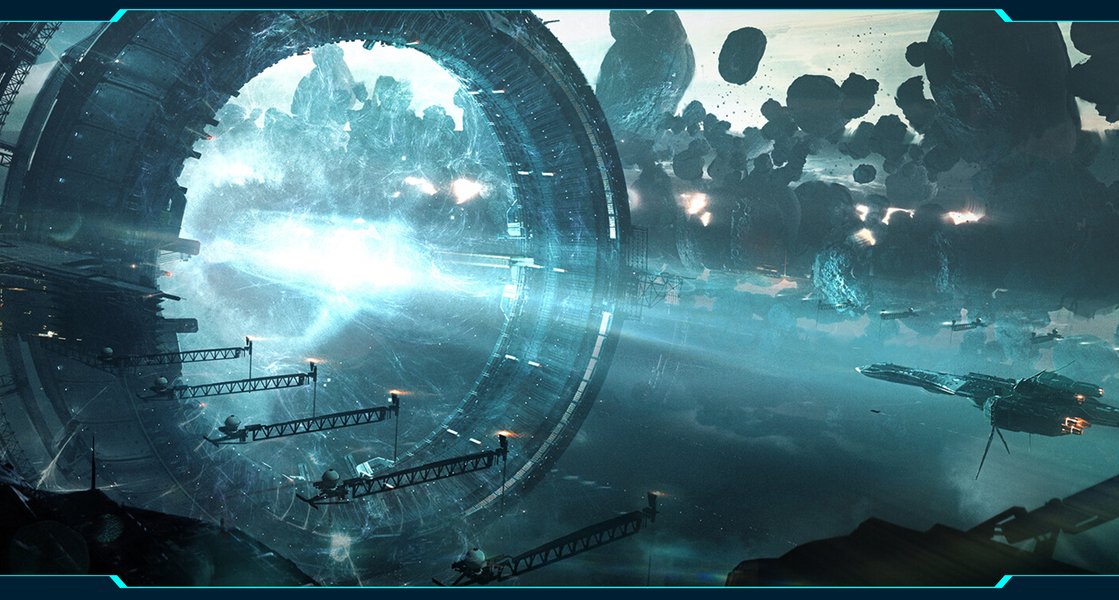 Letter From the Chairman - Roberts Space Industries | Follow the development of Star Citizen and Squadron 42Roberts Space Industries is the official go-to website for all news about Star Citizen and Squadron 42. It also hosts the online store for game items and…robertsspaceindustries.com
 -
INSIDE STAR CITIZEN
Facial Sculpting. Beards. Makeup. Saving Characters and More! Get ready to express yourself with an infinite amount of possibilities using one of the most robust character customizers in the industry, coming to Star Citizen in Alpha 3.23.
Inside Star Citizen - Roberts Space Industries | Follow the development of Star Citizen and Squadron 42Roberts Space Industries is the official go-to website for all news about Star Citizen and Squadron 42. It also hosts the online store for game items and…robertsspaceindustries.com -
Alles anzeigenExterner Inhalt robertsspaceindustries.comInhalte von externen Seiten werden ohne Ihre Zustimmung nicht automatisch geladen und angezeigt.
Risky Business
This time of year, from Banshee to Horus, you can feel a manic tension creep across the 'verse. Trigger fingers start getting itchy, credits begin igniting fires within pockets, and every risk-taker, daredevil, and intrepid adventurer the galaxy over feels the urge to put it all on the line.
Stella Fortuna is upon us once more. Take your chance, make your mark. What have you got to lose?
Externer Inhalt robertsspaceindustries.comInhalte von externen Seiten werden ohne Ihre Zustimmung nicht automatisch geladen und angezeigt.Defy the Odds
Take control of the ‘verse’s fastest ships and see how
you stack up against the system’s top racers. Think
you can hang with the best?
We’ll see you on the track.Externer Inhalt robertsspaceindustries.comInhalte von externen Seiten werden ohne Ihre Zustimmung nicht automatisch geladen und angezeigt.Duke it Out
Get behind the stick of a true bruiser and test
your mettle against like-minded psychos prowling
the galaxy looking to pick a fight.Green Machines
Externer Inhalt robertsspaceindustries.comInhalte von externen Seiten werden ohne Ihre Zustimmung nicht automatisch geladen und angezeigt.The Fury, Razor, and mighty Hercules go green this year, joining the likes of the Mercury, 400i, 600i, Hammerhead, Vanguard, and Redeemer, enveloped by the luck of the season and a sparkling emerald Fortuna paint scheme.
The Green Team
Externer Inhalt robertsspaceindustries.comInhalte von externen Seiten werden ohne Ihre Zustimmung nicht automatisch geladen und angezeigt.Get your Arena Commander crew together for a little Stella Fortuna-themed Team Elimination. Punks can find out once and for all if they truly feel lucky (well, do you?), and the top three players of the winning team will earn a special Stella Fortuna '54 Coin.
Go Green!
Externer Inhalt robertsspaceindustries.comInhalte von externen Seiten werden ohne Ihre Zustimmung nicht automatisch geladen und angezeigt.This spirited community contest challenges you to create a banner or pennant supporting your favorite team, be that literal or figurative, in the arenas of combat and racing. The top banner in each category will win appropriate prizes, with a third wild-card award going to the banner maker that employs the most fate-defying use of materials in their design.
Limited-Time Fortuna Paints
Visit robertsspaceindustries.com/comm-link for details.
Fortuna Ship Packs
Visit robertsspaceindustries.com/comm-link for details.
Stock-Limited Offers
Legendary Fortuna ships return, including the stock-limited Constellation Phoenix Emerald. These packs will be released in three waves:
Wave 1: March 13 - 1600 UTC
Wave 2: March 14 - 0000 UTC
Wave 3: March 14 - 0800 UTC
Visit robertsspaceindustries.com/comm-link for details.
SHIPS OF FORTUNE
RSI Store promotion. Visit robertsspaceindustries.com/comm-link for details.
Externer Inhalt robertsspaceindustries.comInhalte von externen Seiten werden ohne Ihre Zustimmung nicht automatisch geladen und angezeigt.CRUSADER
C2 HERCULESExterner Inhalt robertsspaceindustries.comInhalte von externen Seiten werden ohne Ihre Zustimmung nicht automatisch geladen und angezeigt.CRUSADER
MERCURY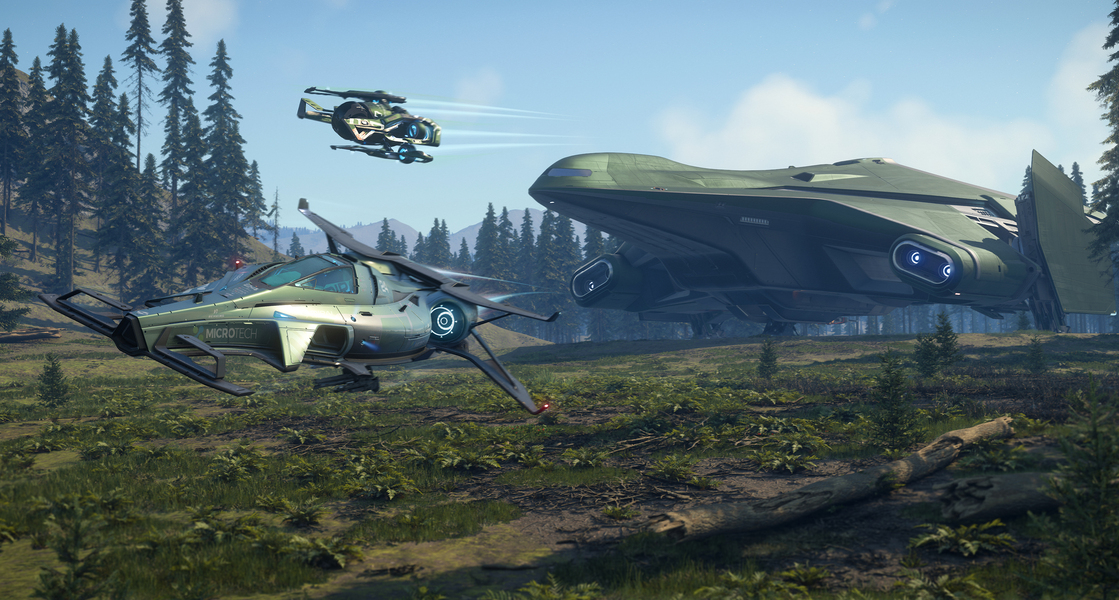 St. Patrick's Day 2024 - Roberts Space Industries | Follow the development of Star Citizen and Squadron 42Roberts Space Industries is the official go-to website for all news about Star Citizen and Squadron 42. It also hosts the online store for game items and…robertsspaceindustries.com
 -
Alles anzeigenExterner Inhalt robertsspaceindustries.comInhalte von externen Seiten werden ohne Ihre Zustimmung nicht automatisch geladen und angezeigt.
Squadron 42 Monthly Report
This is a cross-post of the report that was recently sent out via the monthly Squadron 42 newsletter. We’re publishing this a second time as a Comm-Link to make it easier for the community to reference back to.
TO: SQUADRON 42 RECRUITS
SUBJ: DEVELOPMENT UPDATE 03:06:2024
REF: CIG UK, CIG DE, CIG LA, CIG TX
FAO Squadron 42 Recruits.
Welcome to February’s Squadron 42 development report. Enclosed you will find details on the latest progress made across the campaign, including combat encounters, vehicle collisions, and environmental storytelling.
Thank you for your continued support of Squadron 42.
Sincerely,
CIG COMMUNICATIONS
AI (Content)
AI Content continued to make key enhancements and refinements, with the Idris Stanton receiving focus in February. For example, dynamic conversations were fine-tuned with updates to NPC standing positions and additional randomizations to provide a more authentic feel.
Updates were also made to the gym, including punch bags that now align perfectly and animate smoothly. They also reworked gym hours to be more balanced, so players will see the correct number of NPCs whenever they choose to visit. Plans for busier times were created too to ensure NPCs can always find a place to work out.
Additional animations were added to the bridge, including ‘hands-on-ears,’ to demonstrate cross-ship communication and add variety. Throughout the ship, NPCs will now carry a more diverse range of items too.
Trolly-pushing and cargo-handling animations were refined for added realism, while the security officer outside the bridge salutes players as they walk by.
AI (Features)
Last month, the AI Features team progressed with two key fights and continued to improve combat animations for FPS encounters. Hit reactions were also enabled for NPCs.
The team also expanded the movement system to allow NPCs to use ad-hoc animations to enter cover locations without passing through dynamically created paths.
They also continued to support the other SQ42 teams by investigating and fixing various bugs.
AI (Tech)
During February, AI Tech focused on a variety of improvements. For NPCs using trolleys, focus was on the exact positioning of trolleys in the environment. Now, an NPC can correctly push a trolley to a location with an arbitrary orientation. The team also improved transit and elevator usage while pushing trolleys so that the overall flow is more robust and fluid.
Spaceship behaviors were also iterated on to deliver better ship-vs-turret combat. Fighters will now correctly target standalone turrets and perform appropriate combat behaviors.
Numerous updates were added to the Apollo tool, such as improved feedback for errors in missions. The team also increased usability when navigating between mission callbacks, allowing the designers to jump to the appropriate logic from multiple elements of the interface. A new UI for the Subsumption tool is underway too.
Specifically for SQ42, AI Tech focused on support and bug fixes across the project. For example, they fixed the calculation that animations use when NPCs enter cover to ensure they’re facing their target.
They also fixed an issue with ship operator seats caused by the AI thinking that only a specific animation was available when exiting.
Art (Weapons)
February saw the Weapons team improving wear maps across all FPS weapons. They also redesigned iron sights alongside the screen sizes for dedicated tools and Multi-Tools.
The Behring P4-AR rifle was reworked and various improvements were made to the fire extinguisher too.
Gameplay Story
Gameplay Story began February updating a number of scenes in Chapter 16 with the newly standardized helmet setup.
“It felt great to get these scenes finished off and to see the helmet animating nicely as the characters put it on.” Gameplay Story Team
The team also began receiving new facial animations and mastered audio, allowing them to complete several existing scenes. Alongside this, new motion capture enabled significant updates to a range of scenes. For example, a two-person scene in Chapter 4 was reshot to account for a new location and start poses, significantly improving the overall scene.
Polish was done for Chapter 1, and a small but significant update was made to the cast in Chapter 14.
Graphics & VFX Programming
Throughout February, the Graphics teams progressed with their longer-term tasks. For example, work is nearing completion on the unification of gas-cloud and planet-cloud upscaling, though challenges caused by animated lights in gas clouds need to be solved. The gas-cloud occlusion effect is also nearing completion, which will increase the detail level of all gas clouds, even in flat-lit scenarios. The team also resolved a long-standing issue that caused a harsh line to appear when 600m from where a gas cloud blends with the near-fog system.
The Global Illumination team continued to work on a system to approximate complex materials within a ray-traced view of the world. Last month, they began looking into performance improvements before tackling some of the more complex issues, like moving objects and zones.
Devs from the water strike team closed out the issues that came up in their final review alongside several new features, including SDF interaction for accurate collisions when vehicles hit water and an improved water-intersection shader.
The rest of the Graphics team focused on improving the upscaling tech. This involved finalizing a new mesh format that gives major performance improvements.
Level Design
The Social Narrative team continued to work on their ‘focus’ chapters, the majority of which are Idris interstitials. February’s work involved making sure the chapter can play out from start to finish and that all narrative and scene content is present and correct. For example, ensuring that the medical flow is working, objectives and markers are in place, emails are set up, ship chatroom content is present, mission-brief text is updated, and the landing and take-off sequences are correct.
Outside of interstitials, feedback was addressed and polishing was done for Chapter One and the Fortunes Cross and Shubin Archon locations.
Narrative
The Narrative team continued to close out SQ42’s remaining text needs. This included providing chatter for some of the background environments, creating mobiGlas content, writing content for cinematics, and continuing to create other opportunities for environmental storytelling to enrich the locations and provide a sense of history.
As mentioned in last month’s report, the team continued to work with the Gameplay and Design teams to polish the Galactapedia experience, solidifying the approach for when and how articles unlock. The existing entries were also passed along to the Localization team to start translating.
“Without spoiling anything, the team kept working closely with an artist to create some exciting content. The team also developed some lore for another set of collectibles that will require art as well. No spoilers!” Narrative Team
Finally, Narrative continued to review the latest levels via playthrough and video to see if scenes are triggering as intended alongside polishing the overall narrative experience.
R&D
In February, the R&D team continued work on the temporal render mode. History filtering was switched to a custom bicubic filter to avoid diffusion and resampling blur due to repeated history look ups. Care was also taken to eliminate potential ringing artifacts during strong camera movements.
The temporal filtering of transmittance was improved to avoid glowing thin silhouettes around objects in foregrounds with clouds and the sun behind them. Various improvements were made to preserve history details for as long as possible (slow movement, no significant cloud disocclusion, etc.), and to quickly converge to a full-resolution image in case history needs to be rejected.
Tech Animation
Last month, Tech Animation focused on refining head assets and cleaning up technical debt around their implementation. This comes as a precursor to polishing head assets and refining eye alignment in the editor to ensure characters look as good as possible.
Further to this, a large contingent of the department is working on asset setup for lockers. These will allow players and NPCs to change their apparel to something more appropriate to their current priorities.
“This sounds simple but, in practice, we have to support a wide array of assets that can be stowed and recovered from these vessels. It can take quite some time to ensure everything is set up correctly.” Tech Art/Animation Team
The team also kicked off initiatives to ensure the health of the build remains stable and triage technical debt built up over the course of the project.
UI
The UI team worked closely with the Environment and Cinematics teams last month, creating several pieces of ‘movie style’ UI that appear during cutscenes. They also created screens around the game levels to help with storytelling and atmosphere. Design work was done to help improve EVA and AR markers too.
VFX
Last month, as well as the usual Art, Cinematics, and Design support, the VFX team focused on polishing and optimizing an effects-intensive in-game scenario. As part of this, the artists began looking at areas where they can create bespoke explosion texture sequences to create a more cinematic, high-fidelity experience for the player.
WE'LL SEE YOU NEXT MONTH...
// END TRANSMISSION
 Squadron 42 Monthly Report: February 2024 - Roberts Space Industries | Follow the development of Star Citizen and Squadron 42Roberts Space Industries is the official go-to website for all news about Star Citizen and Squadron 42. It also hosts the online store for game items and…robertsspaceindustries.com
 -
Alles anzeigenExterner Inhalt robertsspaceindustries.comInhalte von externen Seiten werden ohne Ihre Zustimmung nicht automatisch geladen und angezeigt.
This article originally appeared in Jump Point 7.6.
Origin Jumpworks 890 Jump
DEVELOPMENT HISTORY
By the fourth decade of the 29th century, Origin Jumpworks had cemented their reputation as a major player in the burgeoning personal spacecraft industry with several lines of accessible, luxury oriented spacecraft that offered distinct alternatives to the output of its contemporary rivals. Origin designs belied the company’s industrial beginnings and largely focused on smaller-crewed and single-seat vessels, each reinforcing the sense that every individual piece was as carefully considered as those of a classic timepiece. Then, in 2852, acting CEO Kain Yolsen made a public announcement that shocked both industry watchers and his own board of executives alike: Origin would risk billions on the creation of a “flagship of the fleet.” That flagship, he further specified, would be known as the 890 Jump, following Origin’s unpredictable system of numbering new spacecraft designs rather than naming them. Before the development of the 890 Jump, high-end corporate spacecraft were a mixed bag of conversions and custom designs, with the ultra-rich favoring everything from adapting surplus military cruisers to constructing purpose-built hulls around standardized cargo ship components. These approaches could cost hundreds of millions of credits and would invariably lead to high running costs and demanding maintenance schedules, making the pursuit tolerable only by a tiny percentage of the potential audience. The 890 Jump, Yolsen announced, would completely change the game by making the personal corporate starship easily accessible to the very and ultra-rich alike.
The only problem was that there was no 890 Jump. At the time of the project’s announcement, no development work had been done beyond the determination that such a spacecraft had potential buyers. It quickly came out that Origin’s financial analysts hadn’t studied the costs of designing and constructing a ship significantly larger than anything in their history, nor had they considered the massive outlay of outfitting facilities and production lines. Yolsen was undeterred, promising Origin’s full resources to making the 890 Jump a true shift in luxury space travel.
To develop the 890 Jump’s overall look, Origin eschewed ordinary spacecraft engineers in favor of contracting industrial designer, Hadrian Wells, who began his time on the project by stating that the spacecraft “must look as at home on the sea as in the stars.” In 2852, this was easier said than done. It was only in recent years that single-seat ships had begun to escape the function-as-form approach that had defined human spacecraft for centuries. Both military and civilian space-faring vehicles of the era were extremely modular and completely utilitarian; full of harsh lines designed to weather the extreme dangers of the vacuum and to function in extant dockyard facilities rather than with an eye to impressing onlookers. The idea that a hundred-plus meter capital ship would be designed around any aesthetic beyond being a capital ship was a genuine shock.
Origin’s development team persisted and within 18 months developed a reasonable (albeit expensive) plan for both the 890 Jump’s overall design and construction. The company invested heavily in broad simulations early in order to allow the 890 Jump to make use of existing docking facilities and repair yards despite its significantly different design aesthetic. The biggest problem for the company was that, for perhaps the first time in modern aerospace history, the industry knew that this was happening. To this day, ship developers typically do not announce projects until either a military contract has been signed or, in the case of civil designs, a functional prototype has flown. The 890 Jump, already an unusual prospect in its own right, was being put together in the eyes of hostile competitors and a bemused press. From day one of Yolsen’s announcement, the 890 Jump was pilloried as everything from a go-nowhere fool’s errand to a criminal waste of a previously successful company’s resources. Few headlines were kind and as the lead prototype’s construction ran into the usual series of snags and issues, the press decried Yolsen’s “fifty billion credit disaster.”
As a result, Origin’s stock fell significantly despite general success across all of their current production lines. Then, just over two years after the first mention of the project, the company went silent. Origin ceased issuing updates on the 890 Jump and restructured the project’s organization to bring it into what internal memos referred to as “the event horizon.” Until the first ship was spaceworthy, the 890 Jump would not be mentioned directly. The tenor of the press changed overnight; where reporters once sought to turn typical teething issues into worrisome projections about Origin’s future, they became increasingly desperate to know what had happened to the ship. “JUMPED OUT?” read a famous Mars Today headline that speculated that Origin had secretly canceled the project or, perhaps, was intending to convert their existing work into a new type of high-end cargo transport. Ultimately, the gambit worked – stock prices stabilized and the 890 Jump faded into the public’s memory as the long process of designing and building both a new kind of starship and the infrastructure needed to support it continued behind the scenes. On March 2857, at a special event in Earth’s orbit, Origin lifted the veil and revealed the production prototype of the 890 Jump to an eager audience. Between its flowing nautical lines, surprising functionality, and unparalleled in-class specifications, the new design was an immediate hit. Overnight, the mood changed completely. Outlet after outlet asked variations of the same question: “Is this the future of spaceflight?” When markets opened the following day, Origin reached a new high and continued climbing well through the 890 Jump’s release the next year. The company had seemingly done what had seemed to onlookers completely impossible by building the elite luxury flagship Yolsen had announced six years earlier.
Over the following nine months and as the first prototypes went through certification and the assembly lines began to spin up, Origin promoted the ship to what they initially feared was a galaxy not ready to accept such a radical design. The company spent significant sums marketing the distinct new look of the 890 Jump, attempting to associate it with luxury in all of the typical ways: 890 Jumps pictured over grand tropical vistas, positioned near beautiful interstellar phenomena, and carrying noted celebrities and popular politicians in extreme luxury. Their post mortem would suggest this was unnecessary and, in fact, the 890 Jump remains the only Origin spacecraft ever to have its marketing budget lowered in the first three months after launch. New and hopeful owners were eager to spread the word about the new ship as far and wide as possible and preorders for hull allocation quickly filled up for seven years’ worth of production. Over the next decade, Origin would struggle to keep up with demand for the ship as it became clear that anyone who was anyone wanted their own luxury space platform.
Throughout the following century, Origin continued to improve the 890 Jump without significantly altering Wells’ original silhouette. Although there have been nineteen models of Jump released during its lifetime to date (not including dozens of custom models outfitted for elite customers), almost all of them have been minor modifications aimed at either upgrading the spacecraft’s technology to adapt to modern developments or at revamping the ship’s interior to keep it aligned with the current generation’s definition of luxury. Origin has continued to pay special attention to making sure the ship remains in the public consciousness, going so far as to employ a dedicated media relations department to pitch and manage 890 Jump appearances in films, vid series, and other media. The greatest challenge of the project, Wells noted as he departed the company following the 2858 launch, would not be the work they had put into building such an unlikely design. Rather, it would be making sure that the design continues to resonate with customers as it becomes more commonplace. By all accounts, Origin has managed exactly this for almost a century.
The major change to the standard package came in 2943 when Origin added launch capabilities and revealed the custom-designed 85x Limited snub craft, which would become a permanent inclusion with all 890 Jump orders. In October 2944, Origin CEO Jennifer Friskers announced that the latest iteration of the Jump was ready to enter production, featuring the addition of a swimming pool and other amenities deemed most appropriate for the celebrity buyers of the mid 2940s.
 Whitley's Guide - 890 Jump - Roberts Space Industries | Follow the development of Star Citizen and Squadron 42Roberts Space Industries is the official go-to website for all news about Star Citizen and Squadron 42. It also hosts the online store for game items and…robertsspaceindustries.com
 -
Das PC-Spiel Star Citizen hat teilweise einen eher zweifelhaften Ruf und wird nicht selten als Geldverbrennungsanlage bezeichnet. Nun allerdings können sich die Entwickler über einen echten Meilenstein freuen.
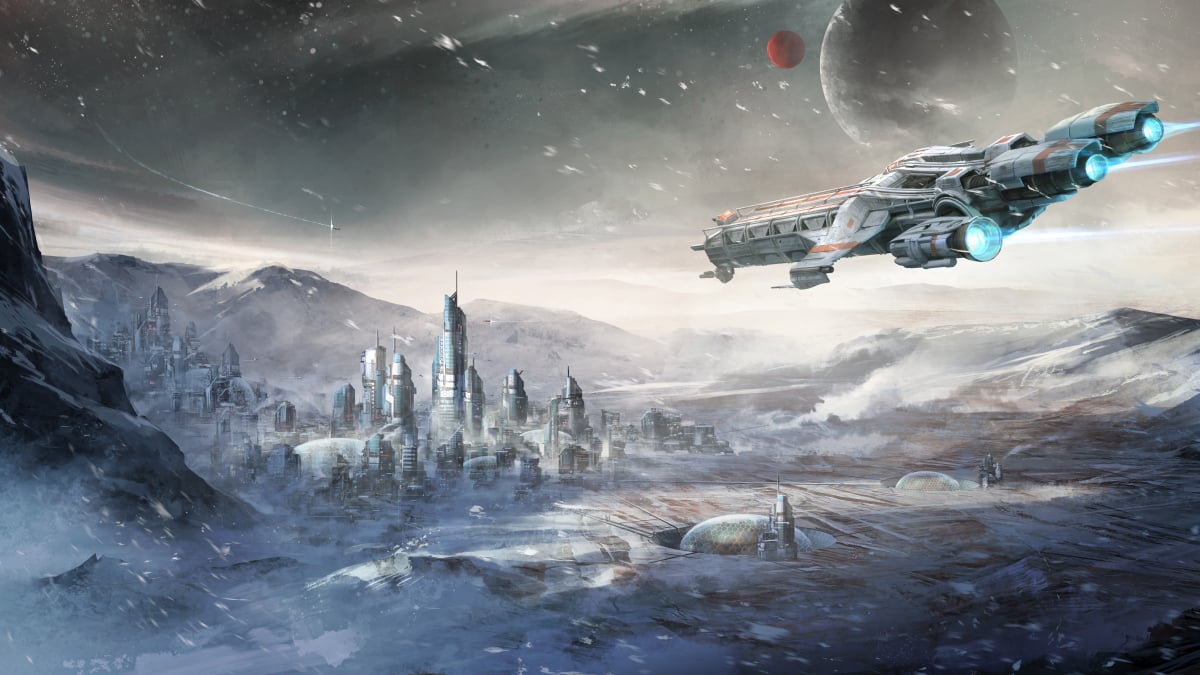 Doch mehr als eine riesige Geldverbrennungsanlage? Große Neuigkeiten zu Star CitizenStar Citizen hat einen wahren Meilenstein erreicht, indem eine neue Technik auf den Testservern zum Laufen gebracht wurde.www.pcgames.de
 -
Alles anzeigenExterner Inhalt robertsspaceindustries.comInhalte von externen Seiten werden ohne Ihre Zustimmung nicht automatisch geladen und angezeigt.
Hello everyone, xē'suelen
Are you familiar with the story of Nick Croshaw in the 'verse?
Our lore (written by Dave Haddock and our fantastic narrative team) includes a rich history of our ‘verse, which gives our games a great depth, immersion, and realism. One of the key milestones of human achievement within our lore, is “First Jump Day”, when legendary Human astrophysicist and pilot, Nick Croshaw, discovered and navigated the first Jump Point, on the 10th of April, 2271, and became the first Human to visit a planetary system beyond Sol.
Eventually that system was named Croshaw in his honor - his journey was described as “the Jump that changed the course of Humanity”, and led to the star-faring future we depict in Star Citizen and Squadron 42.
You might wonder why we're telling you this story today – well, a little ahead of the historic date of April 10th, over the weekend we had our own First Jump Day celebration! We opened another Tech Preview channel release of our Server Meshing technology to our Evocati testers. For this test, which focused on both Server Meshing and the Replication layer technology, we opened our first functioning Jump Gates, allowing players to test traveling between 2 systems for the first time in our history! During the test, it is also worth highlighting we achieved 350 concurrent players in a single shard (eg a Replication Layer connecting 2 servers), setting a new record!
It’s a great achievement for our Star Citizen teams, with CTG, Development, and Publishing all working together in concert, to make the impossible possible! Of course though, none of this would truly be possible without each and every one of YOU!
We have tracked who the first player to navigate a Jump Point was, which we'll share later this week - but to all of you who took the time to jump in and test, thank you!
In other news, Jumptown ends today, but if you're missing the thrill of PvP, we encourage you to watch the latest episode of Inside Star Citizen, as we explore many of the FPS-combat-related changes coming in Alpha 3.23. We'll answer your questions in our Friday show, Star Citizen Live, at 9am PDT / 4pm UTC.
Last week, we published the latest news from our development teams in February's PU Monthly Report alongside the bi-weekly Roadmap Roundup.
We also rewarded some of our top testers in our Test Universe Champions post, celebrating those who contributed relentlessly to Star Citizen Alpha 3.22 through the game itself, Spectrum, and Issue Council!
Now, let's see what's going on this week:
This Tuesday, enjoy a new Whitley's Guide lore post, this time all about the elegant, sleek, and spacious Origin 890 Jump!
On Wednesday, Stella Fortuna is upon us once more. Lá Fhéile Pádraig sona duit!
Thursday, we'll tell you everything there is to know about the Character Customizer coming with Alpha 3.23. Don't miss this episode of Inside Star Citizen! Our Intel teams have also received an anonymous tip: Josmimxos Xhxuxtuxos... Pshjubmstu xy zjgxha...
This Friday, join our developers in a new episode of Star Citizen Live. You can now submit your questions about FPS combat and catch the show LIVE at 9am PDT / 4pm UTC. The weekly RSI Newsletter will also be delivered right to your inboxes.
On Saturday, the System Seven ground racing league from ATMO Esports hosts the best of the best racers across the 'verse. The tournament is hosted across 7 locations in the Stanton system and only accepts the top 16 teams to participate over 12 weeks: It starts on March 16, with the Qualifying Round | BTR “Buggy Racing Track”! - Watch the Trailer
Don't forget to join the fun with the Crux Cup from Anzia Racing. Sign up before March 16, 1pm UTC, if you want to participate in this series of Persistent Universe ship races throughout March - Watch the Trailer
And last but not least, there are two community events this weekend: If you're in Pennsylvania, USA, join the Philly Bar on Saturday 16, 5:30pm. If you're in Tasmania, Australia, join the Tas Citizen on Sunday 4, 12pm!
a.thl’ē’kol, see you soon,
Lénaïc "Nicou" Riédinger
Community Manager
The Weekly Community Content Schedule
MONDAY, MARCH 11, 2024
- This Week in Star Citizen
TUESDAY, MARCH 12, 2024
- Lore Post - Whitley's Guide, Origin 890 Jump
WEDNESDAY, MARCH 13, 2024
- Stella Fortuna / St. Patrick's Day
- February 2024, Squadron 42 Monthly Report (Comm-Link)
THURSDAY, MARCH 14, 2024
- Inside Star Citizen - Character Customizer (Youtube.com/@RobertsSpaceInd)
- Josmimxos Xhxuxtuxos... Pshjubmstu xy zjgxha...
FRIDAY, MARCH 15, 2024
- Star Citizen Live - FPS Combat Q&A at 9am PDT / 4pm UTC (Twitch.tv/StarCitizen)
- Weekly Newsletter
COMMUNITY MVP: March 11, 2024
Externer Inhalt robertsspaceindustries.comInhalte von externen Seiten werden ohne Ihre Zustimmung nicht automatisch geladen und angezeigt.We're constantly amazed at the contributions made by the Star Citizen community. Whether it's fan art, a cinematic, YouTube guide, or even a 3D print of your favorite ship, we love it all! Every week, we select one piece of content submitted to the Community Hub and highlight it here. The highlighted content creator will be awarded an MVP badge on Spectrum and be immortalized in our MVP section of the Hub.
Operation Shamrock
by Wailander
Externer Inhalt robertsspaceindustries.comInhalte von externen Seiten werden ohne Ihre Zustimmung nicht automatisch geladen und angezeigt.A special unit must retrieve documents from the wreckage of a crashed spacecraft, but will everything go as planned? Sometimes, it's more a matter of luck than skill!
Check out this wonderful new video from Wailander on the Community Hub.
Externer Inhalt robertsspaceindustries.comInhalte von externen Seiten werden ohne Ihre Zustimmung nicht automatisch geladen und angezeigt.My collection of Star Citizen screenshots - Salvehn
Externer Inhalt robertsspaceindustries.comInhalte von externen Seiten werden ohne Ihre Zustimmung nicht automatisch geladen und angezeigt.A merchant opening a shop on Moreland Hills, microTech - LeMage
Externer Inhalt robertsspaceindustries.comInhalte von externen Seiten werden ohne Ihre Zustimmung nicht automatisch geladen und angezeigt.Sunset volunteer patrol at Weeping Cove - InstaShinobi
Externer Inhalt robertsspaceindustries.comInhalte von externen Seiten werden ohne Ihre Zustimmung nicht automatisch geladen und angezeigt.Point Blank Size 10 - Dub_Blunt
This Week in Star Citizen - Roberts Space Industries | Follow the development of Star Citizen and Squadron 42Roberts Space Industries is the official go-to website for all news about Star Citizen and Squadron 42. It also hosts the online store for game items and…robertsspaceindustries.com -
STAR CITIZEN LIVE
We're back with another Live Q&A style episode as our developers answer your burning questions on all things Master Modes coming in Alpha 3.23.
Star Citizen Live - Roberts Space Industries | Follow the development of Star Citizen and Squadron 42Roberts Space Industries is the official go-to website for all news about Star Citizen and Squadron 42. It also hosts the online store for game items and…robertsspaceindustries.com -
INSIDE STAR CITIZEN
Reloading and recoil and scopes, oh my! Join us today as we explore many of the FPS combat-related changes coming in Alpha 3.23
Inside Star Citizen - Roberts Space Industries | Follow the development of Star Citizen and Squadron 42Roberts Space Industries is the official go-to website for all news about Star Citizen and Squadron 42. It also hosts the online store for game items and…robertsspaceindustries.com -
Alles anzeigen
Happy Wednesday, everyone!
Every two weeks, we accompany the Roadmap update with a brief explanatory note to give you insight into the decision-making that led to any changes. This is part of an effort to make our communications more transparent, more specific, and more insightful for all of you who help to make Star Citizen and Squadron 42 possible.
With that said, let’s go ahead and dive into this week’s Roadmap Roundup!
-CIG Community Team
Notable Changes for March 6, 2024
Release View
The following cards have been added to Release View, targeting an Alpha 3.23 release window:
Image Upscaling
Implementing support for GPU upscaling, including DLSS, FSR, and an in-house TSR solution.
Volumetric Clouds Update
Updating Star Citizen's volumetric cloud technology to improve overall visual quality, including the addition of both volumetric shadows as well as the implementation of ground fog.
That's all for this week! No Progress Tracker updates this week as work continues on long-term planning.
Join the discussion on Spectrum, and check out the Roadmap Companion Guide for more information on the Star Citizen Public Roadmap.
 Roadmap Roundup - March 6, 2024 - Roberts Space Industries | Follow the development of Star Citizen and Squadron 42Roberts Space Industries is the official go-to website for all news about Star Citizen and Squadron 42. It also hosts the online store for game items and…robertsspaceindustries.com
 -
Alles anzeigenExterner Inhalt robertsspaceindustries.comInhalte von externen Seiten werden ohne Ihre Zustimmung nicht automatisch geladen und angezeigt.
PU Monthly Report
It’s been a busy start to the year across CIG studios, and February was no different. Read on for everything done for the Persistent Universe throughout February, including vehicle progress, cloud rendering developments, and AI updates.
AI (Features)
As mentioned in last month’s report, AI Features continued to develop features for a key initiative, the first iteration of which is planned for Alpha 3.23. Further details will be revealed in the run-up to release.
AI (Tech)
During February, AI Tech focused on a variety of improvements alongside feature work, including for the navigation system. The main focus of this was on extending the planetary navigation mesh to be able to generate across a whole planet. Due to a limitation of the initial implementation, it currently has a latitude limit at which navigation tiles can be created. However, with the new approach, nav mesh can be generated anywhere on the planet following physics terrain patches. The devs are currently improving the tile border simplification step to make sure all nav-mesh tiles connect correctly with each other.
For NPCs using trolleys, focus was on the exact positioning of trolleys in the environment. Now, an NPC can correctly push a trolley to a location with an arbitrary orientation. The team also improved transit and elevator usage while pushing trolleys so that the overall flow is more robust and fluid.
Spaceship behaviors were also iterated on to deliver better ship-vs-turret combat. Fighters will now correctly target standalone turrets and perform appropriate combat behaviors.
Numerous updates were added to the Apollo tool, such as improved feedback for errors in missions. For example, the overall box that represents a function turns red when the logic contains errors. The team also increased usability when navigating between mission callbacks, allowing the designers to jump to the appropriate logic from multiple elements of the interface. A new UI for the Subsumption tool is underway too.
AI Tech continued to support PU releases, while an important upcoming feature continued development, which can be experienced in Alpha 3.23.
Art (Ships)
Last month, progress was made on the RSI Polaris, with the exterior progressing to LOD0 and the interior approaching its greybox review. Some interior sections were worked up to establish a visual target, while others were redesigned to accommodate gameplay and improve alignment with the art direction.
Two upcoming variants progressed through the pipeline. One continued its LOD0 pass, the other passing the LOD0 Gate review. The latter then moved on to the final damage and LOD passes, while its UV2 and paints were completed and approved.
The gold-standard pass continued for the Aegis Retaliator, which is currently awaiting greybox gate review. Feedback from a recent sanity review is currently underway. The ship’s base, cargo, and bombing/torpedo modules are also progressing well following minor art-direction feedback.
Two unannounced vehicles passed their LOD0 gate reviews, with only one minor issue to resolve between them. Both will now move into the final phase of development that implements damage meshes and LODs.
The RSI Zeus is approaching the end of greybox, with the team polishing geometry around the ship. A redesign of the cargo hold is nearly complete, as are changes to the inner frame of the ramp and ramp-piston mechanism. Additional high-frequency detail was added to help increase the illusion of inner structures between the exterior hull and chassis, while maneuvering thrusters on the nose were moved to allow for better integration into the surface. A redesign of the the ship-to-ship docking ring door and frame was done to better fit the RSI aesthetic, while the mess hall was highly polished. The ship’s habitation is currently being updated. The central hallway bulkheads were widened to allow for better navigation and consistency too.
Polish was completed on another new ship, while yet another progressed through whitebox, greybox, and LOD0. A final lighting pass will be done soon before damage and LOD work.
Externer Inhalt robertsspaceindustries.comInhalte von externen Seiten werden ohne Ihre Zustimmung nicht automatisch geladen und angezeigt.Art (Weapons)
Weapon Art worked through a host of updates planned for Alpha 3.23, including scope magnification and optic improvements. The aim is to overhaul the whole scope system to bring it up to modern FPS standards. The existing iron sights across all weapons were updated too.
Alongside this, updates were made to improve and streamline reloading across all weapons.
Community
The Community Team supported two major events in February, Red Festival and Coramor, the latter with a First Date in the 'Verse screenshot contest and a guide to enjoying activities together. Hundreds of pictures and videos taken by the community during the events are available to view on the Community Hub.
Externer Inhalt robertsspaceindustries.comInhalte von externen Seiten werden ohne Ihre Zustimmung nicht automatisch geladen und angezeigt.The team then supported various community events:
“Congratulations to everyone in the French-speaking community who participated in the Destination Cachée event. The puzzles were particularly well thought out, putting each of the four teams to the test. A pirate team nearly captured a participant, and the security teams had their share of fun as well. We hope that everyone enjoyed participating or watching their favorites on Twitch. We also want to bow to everyone who fought in the recent Verse at War 2° Edition. We loved seeing everyone fighting for their teams in early February! March is coming quickly, and we’re eager to follow the action during the next Crux Cup from Anzia Racing. Ready, set, go!” Community Team
The Community team continued detailing the weekly and monthly schedules with This Week in Star Citizen and This Month in Star Citizen. They also officially announced CitizenCon 2954, which returns to Manchester, UK, October 19-20. The team is already deep in planning for the event, and want to remind you all to NOT miss this one.
Finally, the team updated the Arena Commander Schedule, which keeps players up to date with Arena Commander’s rotating game modes. They also have been working on a variety of initiatives to support the upcoming release of Alpha 3.23, 4.0, and beyond.
Core Gameplay
February saw the Core Gameplay pillar continuing to refine and improve new backpack reloading ahead of QA testing. For example, magazines are now repacked in a player’s inventory, so multiple half-empty mags are condensed into fewer full ones.
Support continued for the ongoing scope updates, including correctly folding down iron sights when sights are attached. Support for blur on the outside of sights is currently underway. The team also enabled the weapon-customization UI to look more holographic ahead of a UI styling pass.
For item wear and misfire, further work was completed on the accumulator system. Additional tools were implemented to make working and testing the system easier too.
For player interaction, the team spent a lot of time bug fixing and polishing. They also added a game option to hide the ‘F’ prompt and added a new control hint for when an offscreen interaction is available.
The devs then added the ability to show the loot screen from the interaction wheel. Players will also now auto-crouch if the object they’re looting is below them. Support was added to automatically open the inventory UI instead of the loot screen if the lootable container is above a certain capacity too.
The team are working on a replacement for the legacy quick-buy UI using Building Blocks. This will also be used for renting vehicles during events. Work continued on the freight elevator kiosk UI backend too.
For the ongoing visor/lens HUD rework, progress continued on various UI elements, including priority notifications, mission objectives, and chat.
Regarding EVA, Core Gameplay continued to implement and improve networking support and ensured that players’ arms and held entities don’t clip into their torsos when traversing and rotating.
For prone, players will now be forced out when they perform actions that require them to crouch, such as melee attacks. Further locomotion improvements were made in collaboration with the Animation team too.
For Master Modes, Core Gameplay continued working with Design to tune archetypes. They have so far completed around 90% of the initial conversion, with further tuning passes and refinement to be done before release.
Work continued on jump points, with the team implementing an updated alignment mechanic. A new UI was also added to give players information on whether their ships are capable of completing travel. Successful tests transitioning between Stanton and Pyro across two separate servers were completed too.
For the resource network and engineering, ‘heat’ gameplay was added, which enables items to generate heat based on their usage. Items will require coolant if necessary and will overheat and degrade in functionality if not addressed.
Life Support is now fully integrated into the resource network, with the life-support generator and tank now functional.
Improved debugging tools for were added for the room system to help better understand how the resource network and life support interoperate.
For Radar & Scanning, Core Gameplay completed an important refactor to reduce the number of radar components on vehicles and share data between seat operators. Previously, each seat operator had a unique radar. Now, vehicles can share a single radar across all operators. This means that a pilot or radar operator can focus on collecting radar and scan results that are then shared between all vehicle turrets, rather than each turret needing to scan for themselves. While it’s still possible for vehicles to contain multiple radars, in time, the team will merge the majority into a single shared unit that will not only improve performance but gameplay too.
The team also supported elevators for the upcoming instanced hangars and supported quantum travel and markers working alongside Server Meshing when transitioning to a new solar system.
Externer Inhalt robertsspaceindustries.comInhalte von externen Seiten werden ohne Ihre Zustimmung nicht automatisch geladen und angezeigt.For Arena Commander, the team concluded engineering work for streaming. This technology will allow Arena Commander to utilize any Persistent Universe location with ease and avoid duplicating planets or other object containers, which was previously required to cull expensive locations, such as cities and space stations.
The engineering work for custom lobbies is nearing completion. Following successful internal tests, the system is being handed off to QA for release assessment. The team also began work on some basic custom settings, such as score limit, time limit, and match cycle options, to provide players with more control over their lobbies.
Several internal tests were conducted on Engineering Experimental Modes after an update to the backend matchmaker. New loadouts were created with all the equipment engineers will need for the mode, which is being prepared for go/no-go for an upcoming release.
The team also began focusing on the Arena Commander frontend.
“Recently, focus has been on functionality, but now we are excited to improve not just the overall UX of Arena Commander’s UI but to bring it in line with the quality and style established across the rest of the game.” Core Gameplay Pillar
Finally, the team completed the backend work required for ‘Grav Royale’ and other upcoming game modes and maps. They also continued to enable streaming across all maps while supporting the release of Alpha 3.22.1 with several fixes and quality-of-life changes.
Core Gameplay continued working on an underlying mission system refactor ahead of Server Meshing. Further progress was made on the mission perks and rewards system too.
An update was made to reputation-based hostility, ensuring that if someone is being attacked, any nearby allied or security faction members will come to their defense. This also means that factions with negative reputation with the attacked players will not intervene.
The Contracts Manager was converted to Building Blocks in preparation for the new mobiGlas. Further polish and UX improvements are currently underway in collaboration with the UI team.
For persistent and instanced hangars, work began on the instanced-interior system. This manages which hangar instances exist, need to be created, and which physical gateways are used to transition between the instance and the rest of the game world.
The team implemented the initial version of automated cargo loading and unloading, including displaying information on ASOP terminals that the ship is currently unavailable for retrieval due to being loaded or unloaded.
Progress was also made on the freight-elevator and loading-platform occlusion logic, which determines where items can be placed on the elevator or platform. Support was also given to the Locations team for marking up hangars with loading platforms and freight elevators.
Finally for Core Gameplay, the team worked on various debug tools to aid in testing and debugging the various systems that drive instanced hangars, the warehouse system, and loading platforms.
Economy
Last month, the Economy team made changes to bring Salvage more in line with the PU’s other careers. They’re currently rebalancing commodities to improve the Cargo career experience too.
Support was also provided for the XenoThreat Global Event, and the team began looking at FPS ammo prices.
Graphics, VFX Programming & Planet Tech
Throughout February, the Graphics teams progressed with their longer-term tasks. For example, work is nearing completion on the unification of gas-cloud and planet-cloud upscaling, though challenges caused by animated lights in gas clouds need to be solved. The gas-cloud occlusion effect is also nearing completion, which will increase the detail level of all gas clouds, even in flat-lit scenarios. The team also resolved a long-standing issue that caused a harsh line to appear when 600m from where a gas cloud blends with the near-fog system.
The Global Illumination team continued to work on a system to approximate complex materials within a ray-traced view of the world. Last month, they began looking into performance improvements before tackling some of the more complex issues, like moving objects and zones.
February saw the Vulkan team pushing hard toward release, working through various performance issues such as compiler bugs caused by Vulkan’s complex shaders. They also worked on a shader-caching mechanism to compile shaders while the game is loading to avoid hitches. They’re also considering whether this process can later run in the patcher to further reduce the chance of compiling when the game starts. Although progressing, this may not be fully complete by the initial public release.
Devs from the water strike team closed out the issues that came up in their final review alongside several new features, including SDF interaction for accurate collisions when vehicles hit water and an improved water-intersection shader.
Last month, the Planet Tech team began improving the editor workflow for creating planets and planning out the next version of planet tech (v5). Planet Tech v5 will cover a variety of areas but the primary goals are to make creating planets quicker and easier and to try and achieve more diversity, density, and consistency in quality across whole planetary surfaces.
The rest of the Graphics team focused on improving their upscaling tech ahead of its public release. This involved finalizing a new mesh format that gives major performance improvements.
Lighting
February saw the Lighting team continue to support various upcoming PU initiatives, including Distribution Centers, instanced hangars, freight elevators, and the new character customizer.
Externer Inhalt robertsspaceindustries.comInhalte von externen Seiten werden ohne Ihre Zustimmung nicht automatisch geladen und angezeigt.Locations (EU)
In February, the Landing Zone team worked with the Feature team to finalize the working prototype for cargo and the new hangar experience. Final art and LODs are now nearing completion on all of the modifications to hangars necessary for this exciting new feature.
Externer Inhalt robertsspaceindustries.comInhalte von externen Seiten werden ohne Ihre Zustimmung nicht automatisch geladen und angezeigt.The Sandbox 2 team worked toward closing out the upcoming Distribution Centers. For example, art is being finalized and optimized while Level Design added the final tweaks to make sure the various areas can support all the gameplay the Mission team want to add.
Externer Inhalt robertsspaceindustries.comInhalte von externen Seiten werden ohne Ihre Zustimmung nicht automatisch geladen und angezeigt.Mission Design
Last month, Mission Design continued to work on a chain that comprises various mission types that scale in difficulty.
Elsewhere, designs for new missions are currently being signed off, while content and technical requirements are underway for future hauling content.
The development of XenoThreat 1.2 continued, with changes to gameplay and the implementation of freight elevators, while Blockade Runner received polish and the implementation of freight elevators.
Narrative
February saw a flurry of mission work as Narrative focused on the upcoming Alpha 3.23 patch. Alongside UI and hint text, many of the new gameplay features will have corresponding missions, and the team have been working closely with Design to develop the narrative players will experience. For example, the new Distribution Centers feature a wide variety of missions, new and old. Additionally, narrative work began on new Pyro-based missions to help expand the gameplay at its various locations.
Looking further forward, progress continued on future story missions. These will be more involved than typical missions, featuring things like bespoke dialog and custom logic. The hope is that these types of missions will serve to build out the story of the wider universe and work alongside the more traditional systemic missions.
Last month, the Narrative Design team continued to develop the tourist behaviors that will bring new life to Star Citizen’s large in-world events.
“It has been interesting balancing how to make sure the NPC presence is felt while not being overly distracting from the event itself.” Narrative Team
Finally, several new narrative posts were published, including a Whitley’s Guide to the Valkyrie and a fresh batch of Galactapedia articles.
R&D
In February, the R&D team continued work on the temporal render mode. History filtering was switched to a custom bicubic filter to avoid diffusion and resampling blur due to repeated history look ups. Care was also taken to eliminate potential ringing artifacts during strong camera movements.
The temporal filtering of transmittance was improved to avoid glowing thin silhouettes around objects in foregrounds with clouds and the sun behind them. Various improvements were made to preserve history details for as long as possible (slow movement, no significant cloud disocclusion, etc.), and to quickly converge to a full resolution image in case history needs to be rejected.
Tech Art/Animation
Last month, the Tech Animation team focused on refining head assets and cleaning up technical debt around their implementation. This comes as a precursor to polishing head assets and refining eye alignment in the editor to ensure characters look as good as possible.
Further to this, a large contingent of the department is working on asset setup for lockers. These will be placed throughout the 'verse and allow players and NPCs to change their apparel to something more appropriate to their current priorities.
“This sounds simple but, in practice, we have to support a wide array of assets that can be stowed and recovered from these vessels. It can take quite some time to ensure everything is set up correctly.” Tech Art/Animation Team
The team also kicked off initiatives to ensure the health of the build remains stable and triage technical debt built up over the course of the project.
VFX
Last month, the VFX team continued working on several upcoming locations, including freight elevators and Distribution Centers.
They also investigated an issue with planetary ground storms where fog was coming in too thick when light winds arrived. Although it's difficult to balance dynamic effects such as this, it will be easier for players to see where they are going if a storm is relatively mild.
Star Citizen Monthly Report: February 2024 - Roberts Space Industries | Follow the development of Star Citizen and Squadron 42Roberts Space Industries is the official go-to website for all news about Star Citizen and Squadron 42. It also hosts the online store for game items and…robertsspaceindustries.com -
Alles anzeigenExterner Inhalt robertsspaceindustries.comInhalte von externen Seiten werden ohne Ihre Zustimmung nicht automatisch geladen und angezeigt.
3.22 Test Universe Champions
Before any update to Star Citizen hits the Live servers, it undergoes a rigorous set of testing phases on the Public Test Universe, or PTU for short. The most egregious of bugs and issues are smashed throughout these phases, thanks to your hard work.
With the massive effort put into bringing Alpha 3.22 - Wrecks to Riches to life, from us internally as well as through amazing testers such as yourselves, we wanted to thank every one of you for your help over the last few months!
While we have a robust incentivization program planned down the road, in the short term, we wanted to draw a special spotlight on some of our top testing contributors, with rewards to boot! We plan to continue this new initiative for future patches, with new categories each cycle.
Our sincerest thanks to everyone on this page, and to each of you who have logged in and made a meaningful impact on the development of Star Citizen. If you're looking for more ways to get involved, make sure to check out the Testing section of Spectrum and keep an eye out for future PTU announcements!
Conspicuous Consumption
Externer Inhalt robertsspaceindustries.comInhalte von externen Seiten werden ohne Ihre Zustimmung nicht automatisch geladen und angezeigt.These players had the highest average salvage between all ship parts during open PTU phases and will receive an Argo RAFT.
- Cosmic-D
- CRL-Sheppard
- ZuluTree
Can’t Contain Their Enthusiasm
Externer Inhalt robertsspaceindustries.comInhalte von externen Seiten werden ohne Ihre Zustimmung nicht automatisch geladen und angezeigt.These players bought and sold the most amount of the newly added Carriable Cargo Containers during open PTU phases and will receive a MISC Freelancer MAX.
- jkm3912
- JustSal
- Petahh
Dwelling In The Dilapidated
Externer Inhalt robertsspaceindustries.comInhalte von externen Seiten werden ohne Ihre Zustimmung nicht automatisch geladen und angezeigt.These players spent the most amount of time on foot at the newly added Derelict Settlements during open PTU phases and will receive a Crusader Mercury Star Runner.
- Beamitup
- Nico1997
- Hedge97383
Down Rangers
Externer Inhalt robertsspaceindustries.comInhalte von externen Seiten werden ohne Ihre Zustimmung nicht automatisch geladen und angezeigt.These players purchased so many FPS weapons from in-game shops with aUEC during Open PTU that they had to restock and will receive a Crusader C1 Spirit.
- LUXT3N
- Ktharsis
- Adrahil
Skill Issues Mastered
Externer Inhalt robertsspaceindustries.comInhalte von externen Seiten werden ohne Ihre Zustimmung nicht automatisch geladen und angezeigt.These players spent the most amount of time in Master Modes Game Modes during open PTU phases and will receive an RSI Constellation Andromeda.
- Tatsumo
- Hatalar
- H4rIOcK
Praised Appraisers
Externer Inhalt robertsspaceindustries.comInhalte von externen Seiten werden ohne Ihre Zustimmung nicht automatisch geladen und angezeigt.These players most closely matched the severity rating of their Issue Council reports or contributions to the eventual community severity and will receive an Origin 400i.
- MrKraken
- Commodore_X
- IceW4ve
Sources Forces
Externer Inhalt robertsspaceindustries.comInhalte von externen Seiten werden ohne Ihre Zustimmung nicht automatisch geladen und angezeigt.These players had the most Issue Council contributions to fixed issues that had comments and evidence and will receive an Aopoa San'tok.yāi.
- LordRequiem14
- HaplessWonder
- MADFLO27
The Refreshments
Externer Inhalt robertsspaceindustries.comInhalte von externen Seiten werden ohne Ihre Zustimmung nicht automatisch geladen und angezeigt.These players most consistently updated their Issue Council contributions and will receive an Anvil F7C-M Super Hornet.
- Erth
- Samsonator
- Kuba_Q
Council Confirmed
Externer Inhalt robertsspaceindustries.comInhalte von externen Seiten werden ohne Ihre Zustimmung nicht automatisch geladen und angezeigt.These players had the highest amount and ratio of Issue Council contributions they created that were confirmed by the community and will receive an Esperia Talon Shrike.
- akuboyasu
- Nurseman
- Tal_Adro
Duplication Nation
Externer Inhalt robertsspaceindustries.comInhalte von externen Seiten werden ohne Ihre Zustimmung nicht automatisch geladen und angezeigt.These players most accurately labeled an Issue Council report as duplicate and will receive a Gatac Syulen.
- Northen
- OverkilledTheOnlyOne
- SheepJustGotReal
3.22 Test Universe Champions - Roberts Space Industries | Follow the development of Star Citizen and Squadron 42Roberts Space Industries is the official go-to website for all news about Star Citizen and Squadron 42. It also hosts the online store for game items and…robertsspaceindustries.com -
Alles anzeigenExterner Inhalt robertsspaceindustries.comInhalte von externen Seiten werden ohne Ihre Zustimmung nicht automatisch geladen und angezeigt.Externer Inhalt robertsspaceindustries.comInhalte von externen Seiten werden ohne Ihre Zustimmung nicht automatisch geladen und angezeigt.
Subscriber Promotions
Welcome to March, Subscribers! There’s loads going on throughout the month, including another battle in the ongoing war for Jumptown. To help you in your pursuit of riches or righteousness, every subscriber gets access to Tumbril’s combat-ready Cyclone MT, while Imperators can also head to the labs in the versatile Crusader Mercury. This month’s Flair embraces the culture of Stella Fortuna, with fate-tempting tankards and lucky-green weaponry.
Externer Inhalt robertsspaceindustries.comInhalte von externen Seiten werden ohne Ihre Zustimmung nicht automatisch geladen und angezeigt.Visit robertsspaceindustries.com/comm-link for details.
Externer Inhalt robertsspaceindustries.comInhalte von externen Seiten werden ohne Ihre Zustimmung nicht automatisch geladen und angezeigt.NOT A SUBSCRIBER?
If you would like to receive this flair as part of a subscription, you can subscribe before March 11, 2024 (20:00 UTC).If you subscribe after March 11, you can pick up these and previous months’ flair (going back to 2014) in the Subscriber-exclusive store.
VEHICLE OF THE MONTH
RSI Store promotion. Visit robertsspaceindustries.com/comm-link for details.
Externer Inhalt robertsspaceindustries.comInhalte von externen Seiten werden ohne Ihre Zustimmung nicht automatisch geladen und angezeigt.Externer Inhalt robertsspaceindustries.comInhalte von externen Seiten werden ohne Ihre Zustimmung nicht automatisch geladen und angezeigt.SUBSCRIBER
MERCHANDISE DISCOUNT
Two continuous discount levels are available to all Subscribers in the Merch
Store. Centurion Subscribers receive a 10% off discount, while Imperator
Subscribers receive 15% off. Take advantage of this perk and peruse the
selection of available merchandise including jackets, hoodies, shirts, mugs,
hats, mousepads, posters, stickers, and more. Check out the now.Externer Inhalt robertsspaceindustries.comInhalte von externen Seiten werden ohne Ihre Zustimmung nicht automatisch geladen und angezeigt.SUBSCRIBER STORE
All previous flair items going back to 2014 are available to pledge in the
Subscriber Store. You can fill in any gaps, pick up store-only items, or
grab extras to gift to non-Subscribers from the My Hangar section of your
RSI profile.March 2024 Subscriber Promotions - Roberts Space Industries | Follow the development of Star Citizen and Squadron 42Roberts Space Industries is the official go-to website for all news about Star Citizen and Squadron 42. It also hosts the online store for game items and…robertsspaceindustries.com -
Alles anzeigenExterner Inhalt robertsspaceindustries.comInhalte von externen Seiten werden ohne Ihre Zustimmung nicht automatisch geladen und angezeigt.
Happy Monday, everyone!
Last week, we opened the doors to the Evocati for a series of initial Server Meshing trials, and we're happy to report that it was a success. The playtest involved full-scale static meshing, with one server dedicated to Pyro and another to Stanton, both seamlessly navigating through the replication layer to the same shard.
During the 5-hour playtest, we encountered only one server crash, and despite a hiccup on the Pyro side of the shard, Stanton, which was running on the same shard, continued seamlessly without any disruptions. Even more encouraging was the swift recovery, as Pyro bounced back in just over 2 minutes.
This week, we're aiming to take another big step forward by opening the Jump Gates between systems for the first time.
We want to take a moment to thank everyone for participating and, just generally, for all the support you have shown us over the years. 2024 is shaping up to be really special, and we couldn't have come this far without each and every one of you.
We'll see you on the other side.
Externer Inhalt robertsspaceindustries.comInhalte von externen Seiten werden ohne Ihre Zustimmung nicht automatisch geladen und angezeigt.We are also surfing the good vibes into this week after meeting so many of you this weekend at Bar Citizen Manchester! Nearly 200 of you came to hang out with devs, org mates, and good friends. Thanks to everyone for stopping by, we can't wait to do it again soon!
In other news, Jumptown has begun "pharmaceutical" production once again! Keep an eye out for a Priority mission in your mobiGlas, and get your crew ready. That Maze isn't gonna sell itself. Don't forget to close your ramps, and watch the skies for incoming ordnance!
Now, let's see what's going on this week:
This Tuesday, Subscribers will receive March's updates in both Comm-Link and Newsletter form.
Wednesday brings a gaggle of development updates, with February's Monthly Reports and the Roadmap Update coming your way.
Thursday's Inside Star Citizen is all about FPS combat improvements coming to Alpha 3.23, including Reloading, Recoil, Dynamic Crosshair, and Scopes.
This Friday, Star Citizen Live returns with a follow-up Q&A on the Master Modes episode of Inside Star Citizen from a few weeks ago. The team has thoroughly enjoyed reading your discussions on the matter, and looks forward to chatting more about it this week. Make sure to stop by the Question Gathering thread on Spectrum for a chance to get your burning inquiries on the show! Broadcast will begin at 8 AM Pacific / 4 PM UTC.
May your heart be your guiding key,
Community Manager
The Weekly Community Content Schedule
MONDAY, MARCH 4, 2024
- This Week in Star Citizen
TUESDAY, MARCH 5, 2024
- March Subscriber Update Comm-Link
- March Subscriber Newsletter
WEDNESDAY, MARCH 6, 2024
- Roadmap Roundup
- February Star Citizen Monthly Report
- February Squadron 42 Monthly Report (via newsletter)
THURSDAY, MARCH 7, 2024
- Inside Star Citizen (youtube.com/c/RobertsSpaceInd)
FRIDAY, MARCH 8, 2024
- RSI Weekly Newsletter
- Star Citizen Live (twitch.tv/starcitizen)
COMMUNITY MVP: March 4, 2024
Externer Inhalt robertsspaceindustries.comInhalte von externen Seiten werden ohne Ihre Zustimmung nicht automatisch geladen und angezeigt.We're constantly amazed at the contributions made by the Star Citizen community. Whether it's fan art, a cinematic, YouTube guide, or even a 3D print of your favorite ship, we love it all! Every week, we select one piece of content submitted to the Community Hub and highlight it here. The highlighted content creator will be awarded an MVP badge on Spectrum and be immortalized in our MVP section of the Hub.
Don't forget to submit your content to our Community Hub for the chance to see it here!
Crux Cup 2954
EchoBit
Externer Inhalt robertsspaceindustries.comInhalte von externen Seiten werden ohne Ihre Zustimmung nicht automatisch geladen und angezeigt.This year's Crux Cup is underway, but we're still watching the incredible Crux Cup trailer over and over again. Also, where can I sign up for Reclaimer racing? That seems more my speed...
Watch the full trailer on the Community Hub.
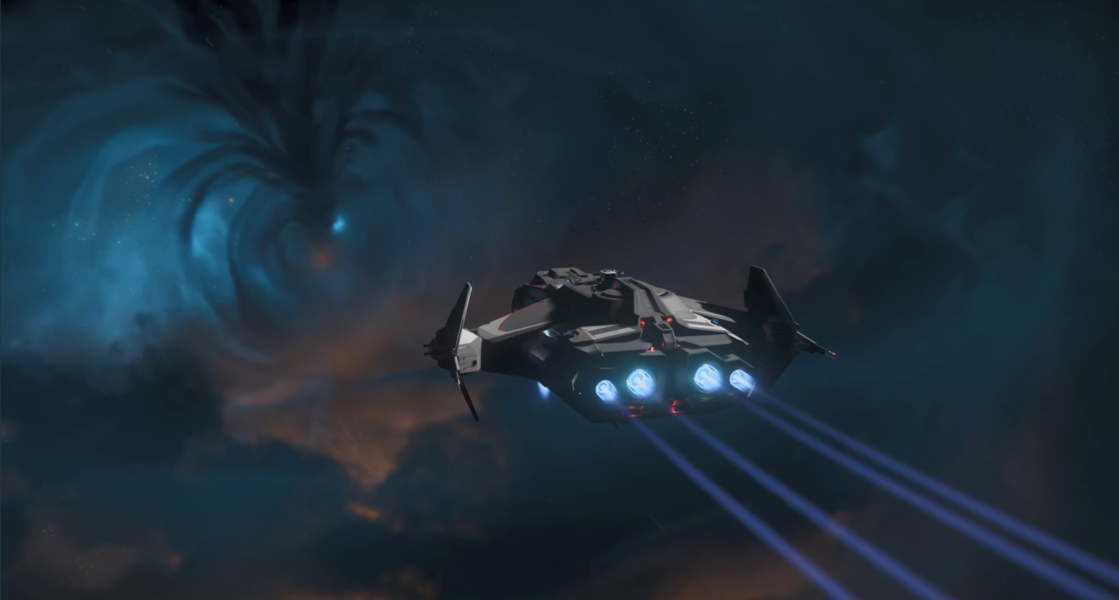 This Week in Star Citizen - Roberts Space Industries | Follow the development of Star Citizen and Squadron 42Roberts Space Industries is the official go-to website for all news about Star Citizen and Squadron 42. It also hosts the online store for game items and…robertsspaceindustries.com
 -
Externer Inhalt robertsspaceindustries.comInhalte von externen Seiten werden ohne Ihre Zustimmung nicht automatisch geladen und angezeigt.Externer Inhalt robertsspaceindustries.comInhalte von externen Seiten werden ohne Ihre Zustimmung nicht automatisch geladen und angezeigt.
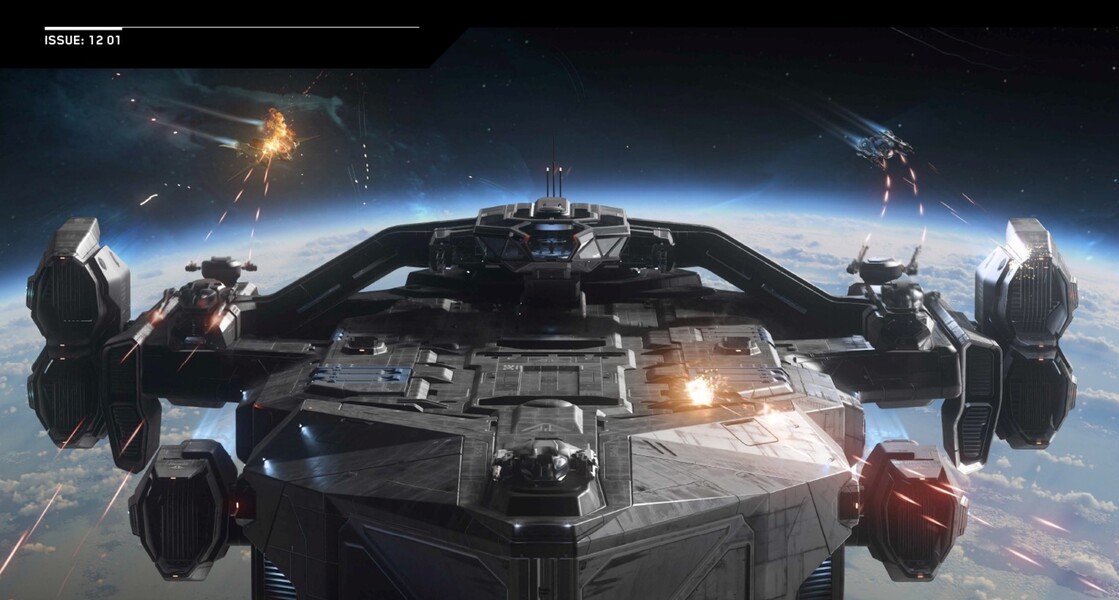 Jump Point Now Available! - Roberts Space Industries | Follow the development of Star Citizen and Squadron 42Roberts Space Industries is the official go-to website for all news about Star Citizen and Squadron 42. It also hosts the online store for game items and…robertsspaceindustries.com
 -
INSIDE STAR CITIZEN
What is the current state of the Aegis Idris? Join us today for a special Director's Commentary as we explore the progress on this capital ship from interior to exterior and beyond!
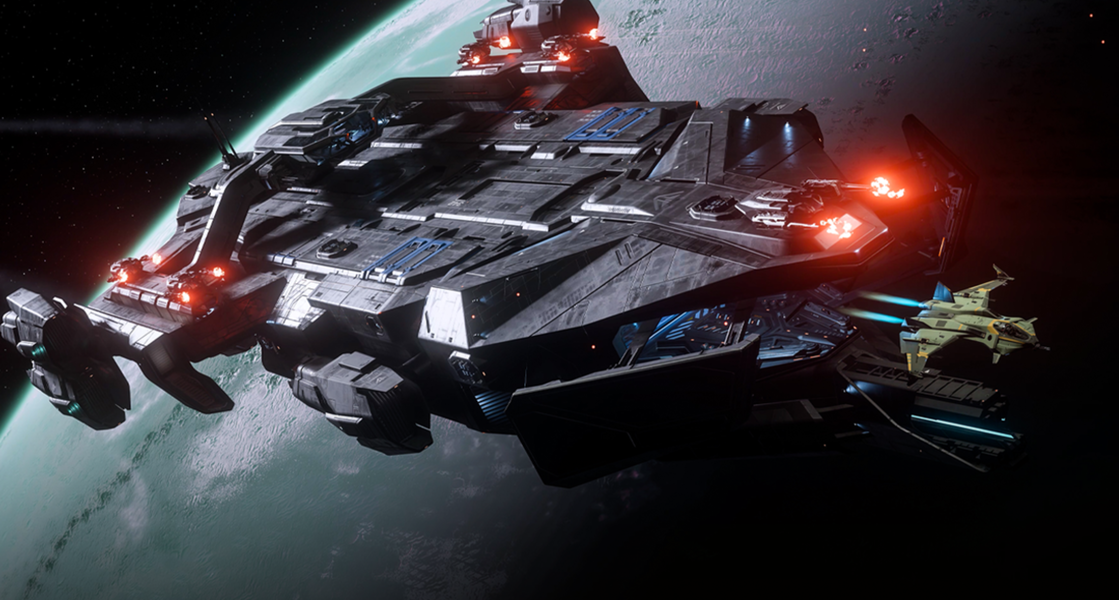 Inside Star Citizen - Roberts Space Industries | Follow the development of Star Citizen and Squadron 42Roberts Space Industries is the official go-to website for all news about Star Citizen and Squadron 42. It also hosts the online store for game items and…robertsspaceindustries.com
 -
Externer Inhalt robertsspaceindustries.comInhalte von externen Seiten werden ohne Ihre Zustimmung nicht automatisch geladen und angezeigt.
Galactapedia Update February 2024
Externer Inhalt robertsspaceindustries.comInhalte von externen Seiten werden ohne Ihre Zustimmung nicht automatisch geladen und angezeigt.THE ARK, TAYAC SYSTEM
Welcome to this month’s Galactapedia update roundup. This month, visit the Kins and Yulin systems, meet an Essosouli, learn about the history of Mirai, and take an in-depth look at Vanduul Kingships. Join the Spectrum thread for any discussion or feedback.
Full-Length Article:
- Kingship – A symbol of martial prowess
Short Articles:
- Kins system – Indenture central.
- Kins I – Scarred with ancient strip mines.
- Kins II – Be careful what you sign here.
- Kins III – Habitable only for Banu.
- Kins IV – Coated with exotic forms of ice.
- Kins belt alpha – Packed with conveniently-located rest stops.
- Kins V – Pale yellow giant.
- Kins belt beta – The system’s garbage dump.
- Yulin system – Work hard but play harder.
- Yulin I – Small planet with an exposed core.
- Yulin flotilla – Indulge in various vices.
- Yulin II – Smog planet with a prismatic atmosphere.
- Buloi Sataball Arena – Home of the most popular sport in the Protectorate.
- Yulin III – An exotic resort planet for Banu.
- Yulin IV – Experience their exciting spacecraft races.
- Yulin cluster alpha – Check out some races here, too.
- Yulin V – Light blue ice giant.
- Yulin VI – A good place to refuel.
- Buloi Satabo – Founder of the Buloi Sataball Souli.
- Mirai – Makers of high-performance spacecraft.
 Galactapedia February 2024 - Roberts Space Industries | Follow the development of Star Citizen and Squadron 42Roberts Space Industries is the official go-to website for all news about Star Citizen and Squadron 42. It also hosts the online store for game items and…robertsspaceindustries.com